
Yoshimoto’s Very Bad Day – Daimyō Army List

Yoshimotos Very Bad Day - Daimyō Army List - Banner

I’m working on a variant of Tilly’s Very Bad Day called Yoshimoto’s Very Bad Day. I don’t have any figures so an obvious question is, what do I have to buy? And that leads us straight to … what is the army list? This post outlines the generic Japanese army list for the draft rules.

The word daimyō means “great name”, and originally denoted a large landowner. During the Sengoku Jidai (the Warring States period, 1467–1615) it came to mean something sharper: an independent regional warlord. Earlier provincial governors had held their authority as servants of the central shogun; the Sengoku daimyō held his by force. He raised armies, levied taxes, and fought near-constant wars to defend and enlarge his domain — and his legitimacy rested on nothing more distant than that. It came from the sword: from his power to conquer, hold his borders, and keep order within his own provinces.
Read more

Musing on “Command from the Enclosure” in Yoshimoto’s Very Bad Day

1600 Battle of Sekigahara - Japanese screen - Emaki2 - honjin - banner

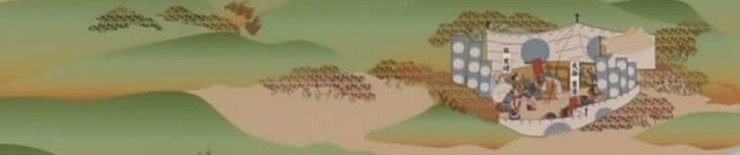
A Sengoku commander-in-chief had two places he could stand. He could ride with his men, going where the fighting was hottest and lending his presence to the unit that needed it; or he could sit still, behind the line, inside a screen of curtains, and run the whole battle from one spot. The second was the honjin — command from the enclosure — and far more often than not it was where the sō-taishō chose to be. This post is about why, and about what it takes to put him on the table.

Read more

Musing on Yoshimoto’s Very Bad Day

1560 Imagawa Yoshimoto - Banner

I’m thinking about writing a variant of Tilly’s Very Bad Day for the Japanese “Age of Warring States” (Sengoku Jidai). Samurai, mounted Samurai with bow or lance, Ashigaru, firearms, that kind of thing.

What follows is a set of design notes examining how Tilly’s Very Bad Day (TVBD) maps onto large battles of Sengoku-period Japan.

To be honest I don’t think Tilly’s Very Bad Day needs extensive mechanical change and the rule align closely with Sengoku warfare — provided they are framed and applied with the right assumptions.

Read more